Faster
From minutes to milliseconds for a task the fleet performs again and again.
Evidence from real runs
A Constelio fleet starts by reasoning with a language model. When a task keeps coming back, the meta-agent turns what works into plain code. Below are measurements from our own fleets, as they were recorded.
Case 01
A collector agent gathers the status of five machines by asking the agent on each one. Same task, same fleet, a few hours apart.
| Metric | Before | After |
|---|---|---|
| Duration | 6 min 42 s | 909 ms |
| Tokens in | 100,460 | 0 |
| Tokens out | 2,408 | 0 |
≈ 440× faster
and no language-model cost at all
The collector uses its language model to plan the task, ask each agent in turn and assemble the answer. It works, but it is slow and spends tokens every time.
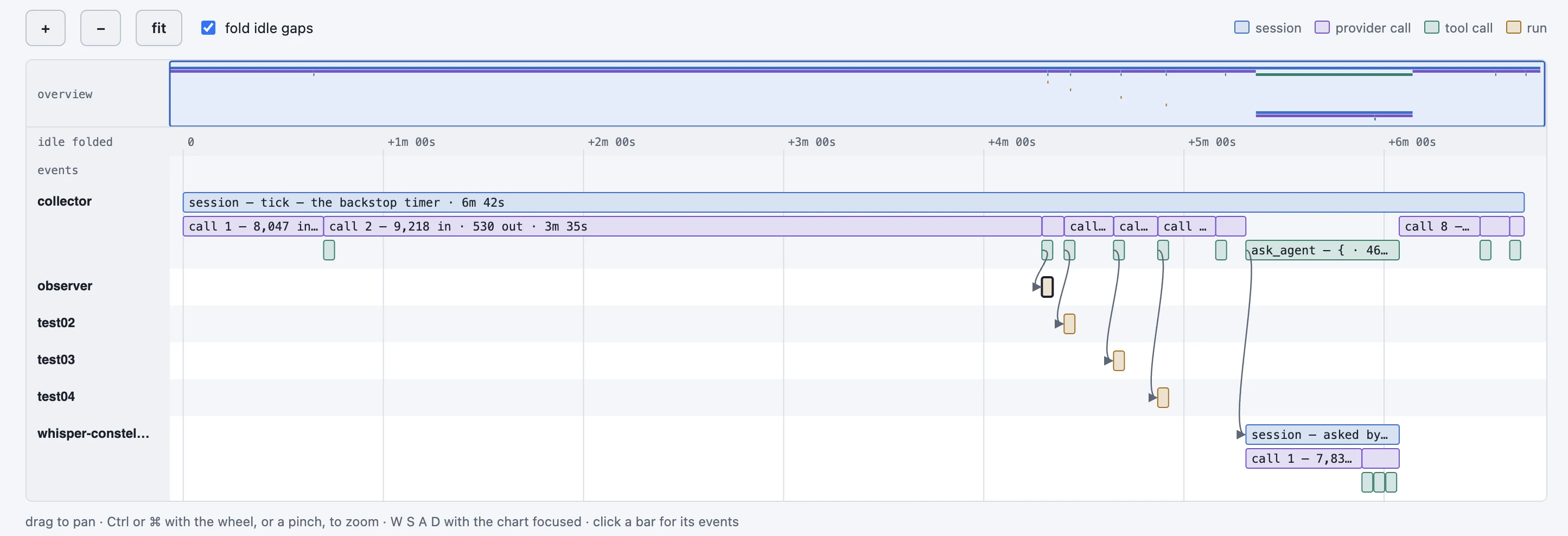
The recurring pattern has become a deterministic run, collect-host-status. The same five agents are asked, by plain code, with no language model involved.
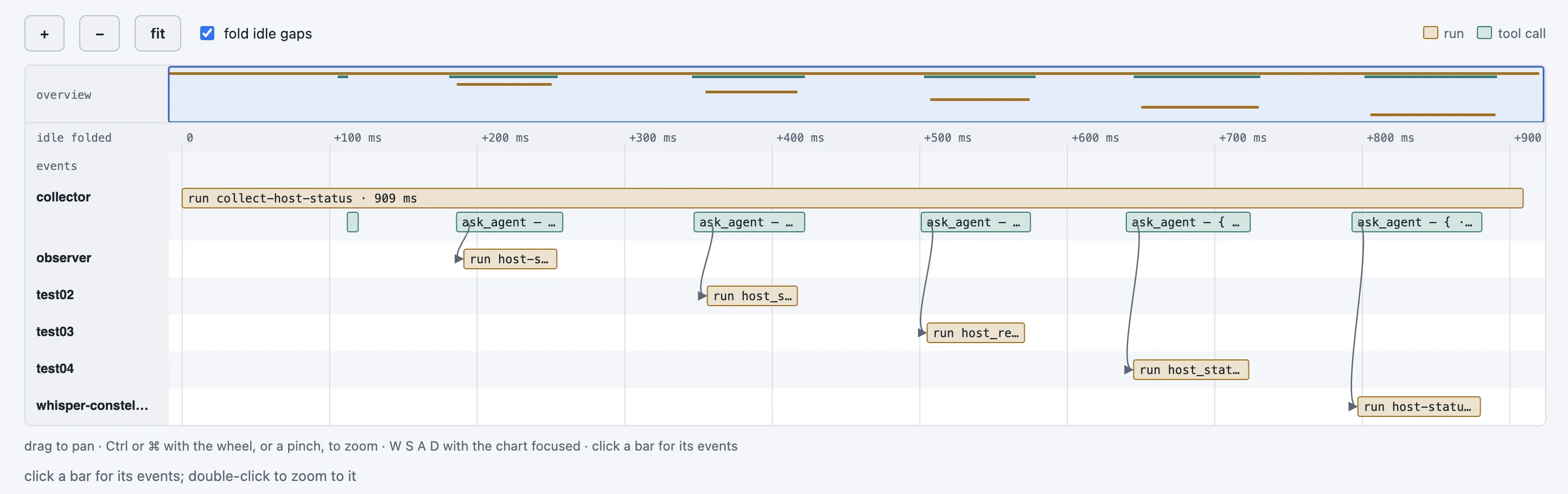
From the call trace
From minutes to milliseconds for a task the fleet performs again and again.
Zero tokens means no inference cost and no GPU time for routine work.
The same steps every time, and every call still recorded: both timelines come from the fleet's own call tracing.
More cases will be added here as our fleets keep learning.